

Home Inspection Fort Worth TX: Tarrant County Buyer Guide | Buffalo Property Inspections
Fort Worth is in the midst of one of the most sustained growth periods in its history. From the cultural corridor around the Kimbell Art Museum and the Stockyards to booming suburban growth in the Alliance, Keller, and Southlake areas, Tarrant County spans an enormous range of home ages, styles, and conditions. Buyers moving into this market — whether upgrading within DFW or relocating from out of state — need a thorough, honest picture of the home they are buying.
Ian, Lawrence and Buffalo Property Inspections serve buyers throughout Fort Worth and across Tarrant County.
The Fort Worth Foundation Reality
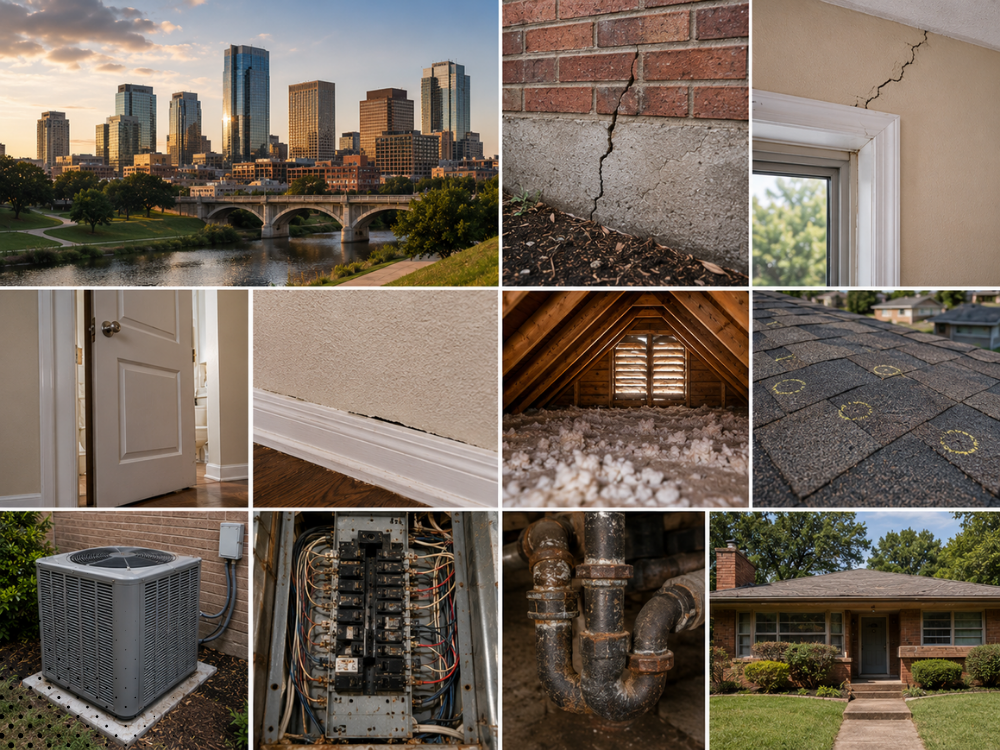
If there is one thing every Fort Worth buyer should understand, it is this: Texas clay soil moves. Tarrant County sits on some of the most expansive clay substrate in the state. That movement creates forces on concrete slab foundations that, over years and decades, cause differential settlement.
Visible signs include sticking doors, sloping floors, diagonal drywall cracks at window and door corners, and gaps at wall-to-ceiling or wall-to-floor transitions. Some foundation movement is minor and manageable. Some requires professional structural evaluation and repair.
Lawrence documents every visible indicator of foundation movement, photographs the foundation perimeter, and helps buyers understand the distinction between what is cosmetic and what warrants a structural engineer's opinion. That distinction is critical to making an informed purchase decision.
Foundation Zip Level Inspection is available for detailed slab evaluations.
HVAC Age in a Texas Summer
Fort Worth summers are brutal. High temperatures from June through September regularly exceed 100°F, and AC systems run for months at near-full load. A unit that is 12 or more years old in Fort Worth has been through significantly more thermal stress than the same unit in a moderate climate.
Lawrence checks HVAC equipment age, filter condition, compressor operation, and ductwork integrity on every inspection. He documents the estimated remaining useful life and flags systems that are likely to need replacement within the next few years so buyers can factor that cost into their offer.
Energy Efficiency Inspection and Home Winterization Inspection are recommended for seasonal planning.
Attic Ventilation and Roof Condition
Fort Worth attic temperatures can reach 160°F or higher during peak summer heat. Without proper ridge and soffit ventilation, that heat accelerates shingle degradation, bakes the decking, and radiant-loads the living space below — raising cooling costs and shortening roof life. Inadequate attic ventilation is among the most common findings in Fort Worth inspections, particularly in homes built before 2000.
Roof condition is also a significant finding in the DFW market — Tarrant County sees periodic hail events that leave impact damage that is not always visible from street level. Lawrence inspects the roof for granule loss, soft spots, flashing condition, and visible impact damage.
Older Neighborhoods in Inner Fort Worth
Fort Worth has a substantial inventory of mid-century homes — bungalows and brick ranches in Fairmount, Mistletoe Heights, and Wedgwood built in the 1940s through 1970s. These homes have real character and increasing buyer interest. They also tend to have original electrical panels, original cast-iron drain lines, and single-pane windows. Lawrence is experienced in inspecting older homes and documents the specific challenges of mid-century Fort Worth construction clearly.
WDI / Termite Inspection and Leak Detection Inspection help identify hidden damage in older homes.
Schedule Your Fort Worth Home Inspection
Buffalo Property Inspections serves buyers in Fort Worth, Keller, Haltom City, North Richland Hills, Arlington, Mansfield, and across Tarrant County.
Call Lawrence at 817-767-3740 or book your inspection online.

FAQ
1. What do home buyers in Fort Worth TX need to know before their home inspection?
Fort Worth buyers should understand that Texas clay soil makes foundation movement one of the most important inspection priorities in Tarrant County. HVAC age is also critical given North Texas's extreme summer heat load. Lawrence Courtien at Buffalo Property Inspections evaluates foundation condition, HVAC age and operation, roof condition, and all structural and mechanical systems.
2. How serious is foundation movement in Fort Worth TX homes?
Foundation movement in Fort Worth ranges from minor cosmetic cracking — common in almost any home on Texas clay — to significant differential settlement that requires professional repair. Lawrence documents all visible signs of foundation movement and helps buyers understand the difference between cosmetic issues and items that warrant a structural engineer's opinion.
3. What is the typical age of homes in established Fort Worth neighborhoods?
Fort Worth has a significant housing stock from the 1940s through the 1980s in neighborhoods like Fairmount, Mistletoe Heights, Wedgwood, and Ridglea. Homes in this era often have original electrical panels, cast-iron drain lines, original HVAC systems, and single-pane windows. More recently built homes in Keller, Alliance, and North Richland Hills present different concerns. Lawrence is experienced with both.
4. Does Buffalo Property Inspections check for hail damage on Fort Worth roofs?
Yes. Lawrence inspects the roof for signs of hail or impact damage — including granule loss, soft spots, and damaged flashing — as part of every standard inspection. Tarrant County is in a hail-active region, and roof damage that is not visible from the street can affect both insurance coverage and the remaining life of the roof.
5. What areas does Buffalo Property Inspections serve in Tarrant County?
Buffalo Property Inspections serves buyers throughout Fort Worth, Keller, Haltom City, North Richland Hills, Southlake, Mansfield, Arlington, and across Tarrant County in the DFW metroplex. Call 817-767-3740 or schedule online today!
