
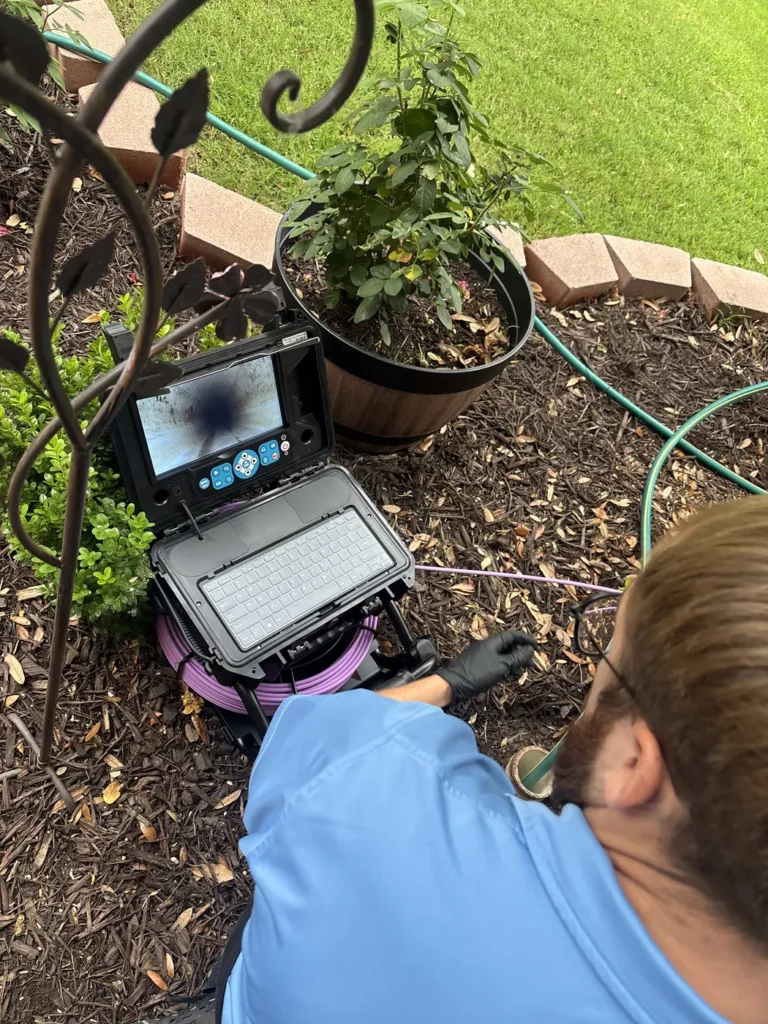
A standard home inspection can tell you a lot about a property, but it usually can’t show you what’s happening inside the sewer line buried underground. Cracks, root intrusion, shifted pipe sections, and areas where waste or water collects may go unnoticed as long as the drains appear to be working normally.
That’s why buyers may want to consider a sewer scope inspection when buying a home. A small camera is sent through the sewer line to show its interior condition and identify concerns that may require further evaluation or repair.
Before you close, here’s what a sewer scope inspection can reveal and when adding one to your home inspection may be worthwhile.
Is a Sewer Scope Inspection Worth the Money
A sewer scope inspection is absolutely worth the cost because it reveals hidden structural issues that a standard home inspection cannot see. Most of these inspections cost between $150 and $300, which is a tiny fraction of the cost to replace a main sewer line.
The main sewer line is the most expensive pipe in any house. Since it is buried deep underground or under concrete slabs, you cannot check its condition by just looking at the yard. A professional uses a high-resolution camera on a long, flexible cable to see the pipes’ actual condition.
What Does a Sewer Scope Inspection Find
A sewer line can still carry wastewater even when it has underlying problems. That means sinks may drain and toilets may flush normally while cracks, shifting pipe sections, root intrusion, or low spots are developing underground.
A sewer scope inspection gives buyers a direct look inside the line to identify visible conditions that could contribute to recurring clogs, backups, leaks, or future repairs. Depending on the property’s plumbing and available access, the camera can reveal several common concerns:
Invasive Tree Root Intrusion
Tree roots naturally seek out moisture and nutrients, entering sewer lines through loose joints or micro-cracks. As roots grow, they expand, catch solid waste, and can cause total line blockages or pipe ruptures.
Pipe Offsets and Structural Fractures
Ground settling, expansive soil movement, or freeze-thaw cycles cause individual pipe sections to shift out of alignment. These offsets create sharp internal ridges that catch debris and cause chronic backups.
Hydraulic Pipe Bellies (Sags)
A pipe belly occurs when uncompacted backfill soil beneath the pipe sinks, creating a low spot. Standing water collects in the sag, causing waste solids to settle out of flow and create recurrent main line clogs.
The American Society of Civil Engineers gave the nation’s wastewater infrastructure a D+ grade in a recent report. This report highlights why the connection between your home and the city is so vulnerable.
Why Older Homes Need a Sewer Scope Inspection when Buying a Home
In older homes, cast iron sewer lines suffer from bottom-channel sulfuric acid erosion, where sewer gas destroys the pipe invert and drains raw effluent directly beneath your foundation slab. Orangeburg pipes (coal-tar-impregnated fiber used from the 1940s to 1970s) undergo severe mechanical delamination, flattening into ovals under soil loads until they collapse.
Even in brand-new builds, uncompacted trench backfill or heavy machinery driven across lot perimeters causes shear fractures at PVC fitting joints or deep pipe bellies that standard water flow tests fail to reveal.
| Pipe Material | Expected Lifespan | Common Failure Mode |
|---|---|---|
| Clay | 50 to 60 years | Root intrusion and cracking |
| Cast Iron | 75 to 100 years | Corrosion and bottom channeling |
| Orangeburg | 30 to 50 years | Total collapse or flattening |
| PVC | 100+ years | Shifting or "bellies" |
Can New Homes Have Sewer Problems Too?
Yes, new homes can have major sewer issues if the ground shifted during construction or if heavy equipment drove over the buried lines. Contractors sometimes accidentally drop debris down the pipes or fail to glue joints properly during construction.
Homeowners often don’t learn about these problems until months later, when their toilets stop flushing. A quick sewer scope inspection before they signed the papers would have caught the error immediately.
The City of Sacramento provides a clear breakdown of homeowner responsibilities regarding sewer laterals, noting that the sewer service from the structure to the sewer main is owned by the property owner.
What Happens During the Inspection Process
The inspector locates a cleanout access point, which is usually a capped pipe in the basement, crawlspace, or yard. They insert high-definition fiber-optic cameras equipped with integrated 512Hz transmitter sondes.
When the scope detects an offset, root mass, or crushed line, a handheld surface receiver pinpoints the exact underground location and depth beneath your lawn or driveway.
Inspectors also evaluate hydraulic pipe bellies (sags), measuring standing water depth against total pipe diameter to flag areas where low slope causes chronic solids surcharging and structural blockages.
You can usually watch the video feed in real time on a monitor. The inspector also looks for standing water, jagged edges, or white buildup known as scale. After the test, you get a digital copy of the footage and a report detailing any findings.
If there is a problem, you can use the report to negotiate repairs with the seller. This gives you the power to ask for a price reduction or require the seller to fix the line before you close.
How to Avoid the Sewer Trap Before You Buy
The best way to protect your investment is to make a sewer scope inspection a non-negotiable part of your due diligence. It is a small price to pay for the certainty that you will not be digging up your front yard next month.
Hire a professional inspector who uses modern, high-definition equipment. This ensures you get a clear look at the condition of the pipes so you can make an informed decision.
Buffalo Property Inspections finds the rot, cracks, and leaks others miss.
Get a professional home inspection from us before you sign your life away. As a professional home inspection company, we give you the truth about the house so you can make a move that makes sense.